
Categories
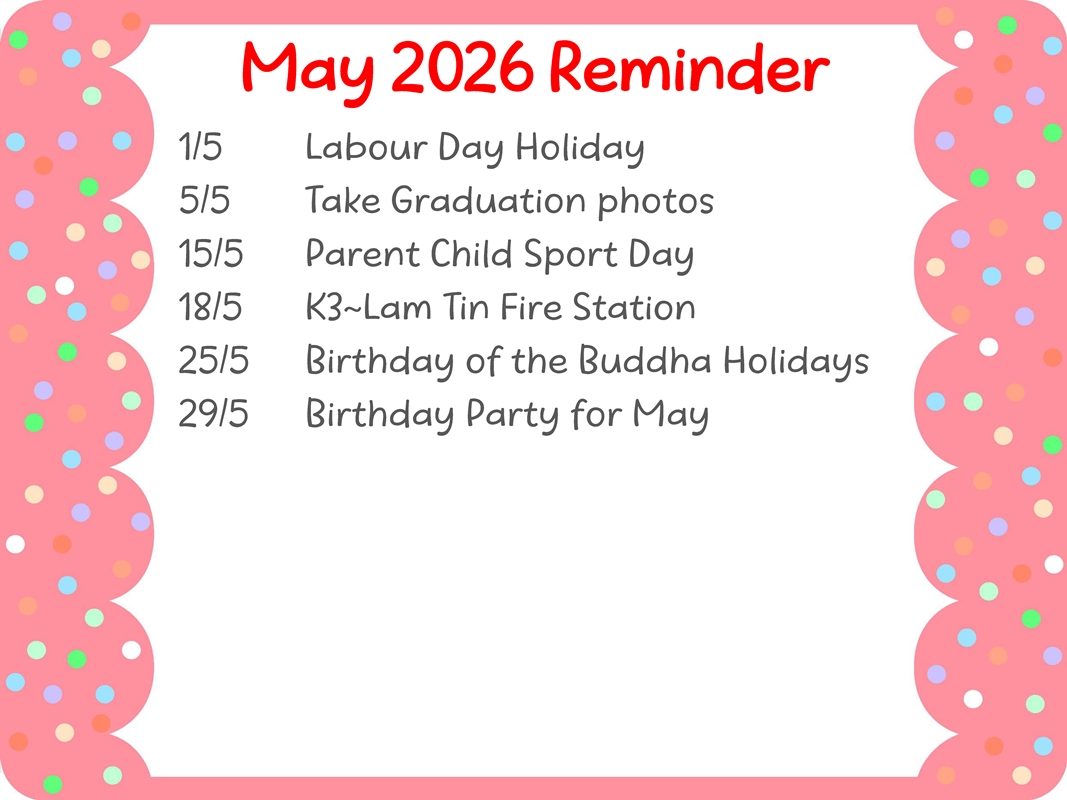
May 2026 Reminder

Written by: Ms. Ng Yee Kam, Founder and CEO of Family Dynamics
Marriage and Family Therapist
Child Play Therapist
Many parents complain that as their children grow older, they become less willing to talk to their parents, and the relationship becomes more distant and indifferent. Parents begin to not know what is on their children’s minds, what their school life is like, and what their friends are like. As far as the eye can see, it’s all gaming, watching TV, surfing the internet, WhatsApp, WeChat, and Instagram! Parents inevitably develop a sense of unease, because it feels like they have lost connection with their beloved children. The more uneasy parents become, the more they want to pull their children back. But the methods they use are often questioning, regulating, criticizing, and blaming, showing a lack of understanding and trust towards their children’s behavior. From the children’s perspective, the parents’ “concern” and “care” feel like control and unreasonableness. As a result, the more the parents want to get closer to their children, the more the children want to avoid their parents! This chasing creates a tense and awkward parent-child relationship, which is truly a pity!
Whether it’s the evolution of society or the nurturing of the next generation, the role of parents is the most important. Parents have multiple responsibilities: care, provision, guidance, and demonstration. The best way to connect the relationship between parents and children and create positive interactions is the way parents convey love and care, which can make children truly feel it. Sometimes parents may be surprised and ask, “Isn’t this how I show concern? How could he not feel it?” In fact, each child’s needs may be different, and the way they crave care may also be different. If parents do not approach it from the child’s perspective, but only selfishly use their own perspective to understand and the methods they are used to in showing care, even if parents “circle around” the child, the same result may occur: one chases, one walks!
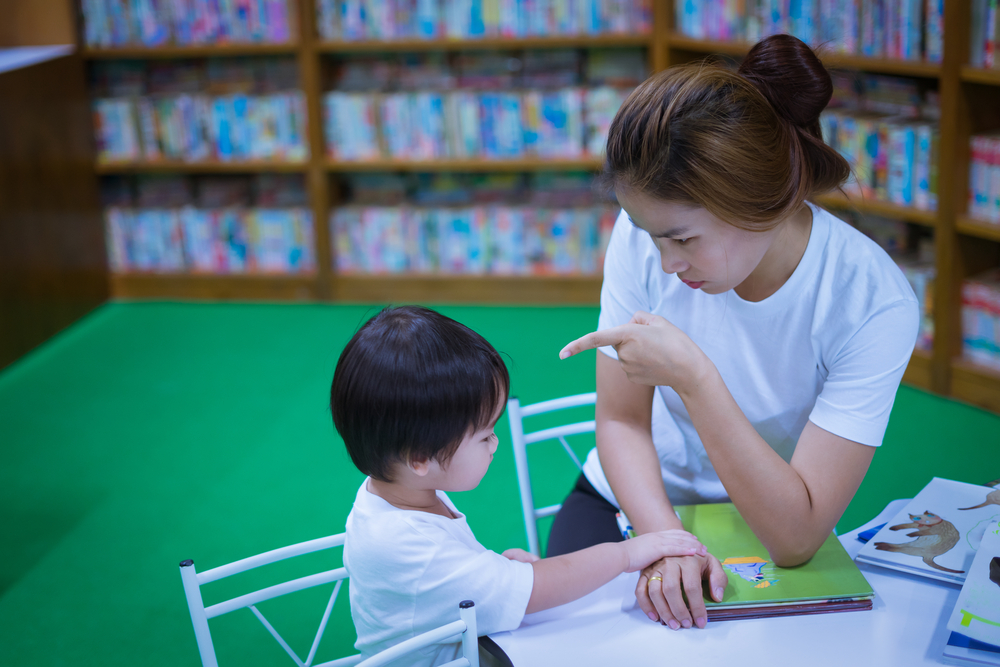
For children to truly feel their parents’ love and care, the key lies in whether the parents’ focus is on the children themselves, or only on the children’s performance. If the parents’ care is focused on the child, the child will definitely feel it, and they will respond in a positive way. If the parents’ concern is only about the child’s performance, the child will eventually become alienated from the parents, and may even shut them out.
If we compare the following examples of what parents say to their children, we can see the difference between “caring for the child” and “caring for the child’s performance”:
When parents come home from work and ask their children:
A “Did you have a happy day at school today?”
B “Did you finish your homework today?”
When the child gets a 65 on a test, the parents say:
A “Are you feeling disappointed with this score? Perhaps you feel unhappy, you can share your feelings with me!”
B “You’ve been lazy and unfocused, how can you get good grades like this? If you don’t work harder, you’ll fail again next time, and might even have to repeat the grade!”
-1.jpg)
Written by: The Educational Psychologist Team of the Heep Hong Society
For young children with autism who have intellectual and language abilities at the 5-6 year old level, what kind of books should they read? What techniques should parents use when reading with their children?
Young children with high-functioning autism should be able to understand simple moral stories. Parents can refer to the “social story” format to help children with autism effectively understand the content. When the child is familiar with the story content, parents can replace the main character with other real people, or even the child themselves, so that the child can gradually put themselves into the moral story scenario. The story characters can be changed, and the story plot can also be slightly altered: for example, “grandma’s house” can be changed to “aunt’s house”, allowing the child to flexibly apply what they have learned. Of course, changes to the characters and plot should be made before the child develops rigidity towards the story details. As for fables, fairy tales and mythological stories that commonly use abstract metaphors, they can be used only when the child with autism has the ability to generalize their knowledge.
In terms of cogntion, when the child’s comprehension reaches a certain level, parents can emphasize emotional words in the story, such as “When she saw the dog, Mei Mei was very scared.” When the child is ready to learn the concept of sequence, parents can emphasize the description of time, such as “Mei Mei did something wrong, and then she said she was sorry.” Based on the child’s level, parents can utilize each page of the storybook, adding or emphasizing appropriate words.
-2.jpg)
In terms of parent-child interaction, for children with autism who have higher abilities, they can take turns with their parents to tell the story, one sentence at a time. This method not only trains the child’s ability to continue the story and focus on listening to others, but also allows the child to deepen their impression of the story through active participation. By using storybooks flexibly, parents can meet the developmental needs of the child and promote parent-child interaction. Children with autism often lack imaginative ability, so storybooks that come with character dolls can be very useful: initially, just tell the story, then add the dolls, and gradually reduce the use of the storybook, until finally using only the dolls to tell the story, and using the “one sentence for you, one sentence for me” method to guide the child out of the storybook and into the world of imaginative play.
In terms of social cognition, parents who use comics can use correction fluid to white out the “speech bubbles” of the characters, then work with the child to create new dialogues. Initially, they can modify certain words or phrases, and when both parties are familiar with the method, they can modify more parts, until all the dialogues are self-created. Daring parents can even try to custom-make storybooks for their child and design different ways of storytelling to attract the child to learn the social concepts they need.
Address: G/F WING B & C, SAU YUE HOUSE SAU MAU PING ESTATE KOWLOON
Fax: +852 2709 9269